Bridging IT and OT in Building Automation: A Unified and Secure Approach with Optergy
Bridging IT and OT in Building Automation: A Unified and Secure Approach with Optergy
Abstract
The convergence of Information Technology (IT) and Operational Technology (OT) is reshaping the building automation landscape. As building systems become increasingly connected to enterprise networks and cloud environments, cybersecurity and interoperability have become critical considerations for owners, operators, and system integrators. This paper examines the challenges and opportunities of IT/OT unification, with a focus on secure connectivity and data intelligence through Optergy’s unified platform, its collaboration with Tosibox and Neeve, and the enhanced cybersecurity capabilities introduced in Optergy Version 6.3.
1. Introduction
Modern buildings are no longer static environments with isolated systems. Today, they are dynamic digital ecosystems where HVAC, lighting, energy management, and access control systems exchange information in real time. The shift toward unified automation platforms enables better efficiency, data visibility, and operational control. However, this same connectivity exposes building systems to cybersecurity threats traditionally confined to the IT domain.
The unification of IT and OT networks presents both opportunity and risk. When properly managed, it allows building owners to leverage enterprise-grade analytics, remote service capabilities, and energy optimization. Without a secure foundation, however, it can open critical infrastructure to cyber intrusion, data breaches, and system instability.
2. The IT/OT Unification Challenge
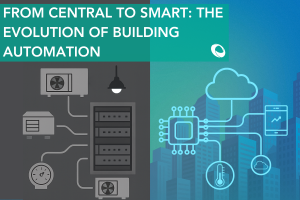
Historically, OT systems functioned on closed, proprietary protocols, physically separated from IT infrastructure. As the demand for interoperability and remote access has grown, the boundary between these environments has diminished.
This evolution brings several challenges:
- Cybersecurity Exposure: Traditional OT systems were not designed with modern threat vectors in mind. Once connected to IT networks or the internet, they can become vulnerable.
- System Complexity: Achieving unification between multiple vendor systems, each with unique communication standards, requires careful planning and secure design.
- Responsibility Gap: In many organizations, IT teams manage security while OT teams manage functionality, creating gaps that cyber attackers can exploit.
The solution lies in a coordinated approach — one that emphasizes secure connectivity, policy-driven access, and intelligent monitoring.
3. Secure Connectivity Through Optergy and Tosibox
Remote connectivity is now fundamental to efficient building management. Yet, common practices such as open VPNs or direct port forwarding expose automation systems to unnecessary risk.
To address this, Optergy has partnered with Tosibox, a company recognized globally for its secure remote access and network automation technology. Tosibox delivers a hardware-based, encrypted, and authenticated connection purpose-built for OT environments.
The Tosibox system ensures that:
- Remote access occurs only through pre-authorized, cryptographically secured channels.
- Network segmentation prevents exposure of internal devices to external threats.
- Integrators can manage multiple client sites without compromising security or performance.
Through this collaboration, Optergy provides a unified and secure platform for remote system management — balancing convenience with enterprise-level cybersecurity.
4. Edge to Cloud with Optergy and Neeve
Neeve is a unified edge-to-cloud platform designed to secure operational technology (OT), unlock building data, and support smart building applications — while providing a solid foundation for future AI adoption.
Neeve enhances Optergy’s unified building automation platform by providing a secure, edge-to-cloud connectivity layer that strengthens system resilience and cybersecurity. Through its zero-trust Secure Edge architecture, Neeve enables encrypted, authenticated remote access without the vulnerabilities associated with traditional VPNs or open network ports. This allows Optergy systems to be managed remotely with confidence, maintaining strict isolation between operational networks and external interfaces.
Beyond connectivity, Neeve’s data normalization and application management framework supports seamless interaction between Optergy systems and other building technologies. Its containerized environment and unified data layer allow facility operators to deploy complementary applications — such as analytics or energy tools — across their portfolio without disrupting existing infrastructure.
From a security and governance standpoint, Neeve’s ISO/IEC 27001 and SOC 2 Type 2 certifications align with Optergy’s focus on cybersecurity in Version 6.3. Together, the platforms deliver an architecture that combines Optergy’s strength in control and energy management with Neeve’s robust, secure infrastructure for device connectivity, system unification, and scalable portfolio oversight.
5. Optergy Version 6.3: Security by Design
The latest Optergy Version 6.3 release introduces a suite of cybersecurity enhancements designed for modern IT/OT unified environments. These improvements reflect a security-by-design philosophy that prioritizes resilience, traceability, and control.
- Enhanced Encryption: Implementation of advanced TLS protocols for secure communications across all network layers.
- Role-Based Access Control (RBAC): Administrators can define precise user permissions, minimizing the risk of unauthorized actions.
- Comprehensive Audit Logging: Full visibility into user activity and system events supports compliance and forensic analysis.
These advancements make Optergy v6.3 one of the most secure platforms in the building automation sector, aligning with best practices recommended by cybersecurity frameworks such as NIST SP 800-82 and IEC 62443.
6. Discussion: Toward a Secure, Unified Future
The unification of IT and OT systems is no longer optional for building owners seeking efficiency, adaptability, and long-term value. However, the path forward requires collaboration between technology providers, integrators, and cybersecurity experts.
Through strategic partnerships with Tosibox for secure remote connectivity and Neeve for intelligent analytics, Optergy delivers a comprehensive solution that meets both the operational and security needs of modern facilities.
As cyber threats evolve, Optergy remains committed to continuous improvement — ensuring its platform not only delivers superior control and energy management but also embodies the principles of cybersecurity, transparency, and resilience.
7. Conclusion
The convergence of IT and OT represents the next frontier of building automation. It enables real-time control, data-driven decision-making, and operational optimization. Yet, without a unified and secure approach, it can expose critical infrastructure to new vulnerabilities.
Optergy’s partnerships with Tosibox and Neeve, combined with the robust cybersecurity framework of Version 6.3, demonstrate that unified building automation does not require compromise. With the right architecture and technology, smart buildings can be both intelligent and secure — prepared to meet the challenges of a connected future.